
Article Plan: 7th Grade Reading Comprehension
This article details resources for 7th grade reading passages in PDF format, covering comprehension tests, skill strategies, worksheets, and supplemental streaming options like Pluto TV.
Seventh grade marks a pivotal year in a student’s reading development. Comprehension shifts from “learning to read” to “reading to learn,” demanding more sophisticated skills. Reading passages, particularly in PDF format for accessibility, become crucial tools for educators and parents. These passages aren’t simply about decoding words; they focus on understanding complex ideas, analyzing text structure, and drawing informed conclusions.
Diagnostic tests, like those assessing “History of a Seagull and the Cat Who Taught Her to Fly,” pinpoint areas needing improvement. Resources offer varied content – from fictional narratives to non-fiction articles – catering to diverse interests. Effective 7th grade reading comprehension builds a foundation for success in all academic subjects and beyond, fostering critical thinking and analytical abilities.

Why Use Reading Passages in 7th Grade?
Utilizing reading passages in PDF format offers targeted practice for essential 7th grade skills. They provide a controlled environment to assess comprehension, vocabulary, and analytical abilities. Worksheets featuring passages cover grammar, writing, and diverse topics like student profiles and hobbies, ensuring varied exposure.
Passages facilitate focused instruction on key areas – identifying main ideas, making inferences, and understanding context. Furthermore, they prepare students for standardized tests by mirroring question formats and content complexity. Resources like CommonLit, ReadWorks, and K12Reader offer readily available, high-quality passages, streamlining lesson planning and supporting individualized learning needs.
Key Skills Assessed by Reading Passages
Reading passages in PDF format effectively evaluate several crucial skills for 7th graders. Primarily, they assess the ability to identify the main idea and supporting details within a text, demonstrating comprehension of central themes. Secondly, passages gauge understanding vocabulary in context, requiring students to decipher word meanings based on surrounding information.
Importantly, they test inferential skills – the capacity to make inferences and draw conclusions not explicitly stated. Diagnostic tests, like those based on “History of a Seagull…”, specifically target themes, characters, and events. These assessments provide valuable insights into a student’s overall reading proficiency and areas needing improvement.
3.1 Identifying Main Idea and Supporting Details
Successfully pinpointing the main idea is fundamental to reading comprehension for 7th graders. PDF reading passages provide focused practice in discerning the central thought of a text. Students learn to differentiate between key information and less important details.

Supporting details act as evidence that reinforces the main idea. Exercises often require students to locate sentences or phrases that directly support the core message. Worksheets containing student profiles, hobbies, or school activities offer ample opportunity to hone this skill. Mastering this ability builds a strong foundation for analytical reading and critical thinking.
3.2 Understanding Vocabulary in Context
7th grade reading passages in PDF format are excellent tools for developing vocabulary skills. Rather than rote memorization, students learn to deduce word meanings from surrounding text – understanding vocabulary in context. This approach fosters a deeper comprehension of the material and improves reading fluency.
Passages often include unfamiliar words that students must decipher using clues within the sentences and paragraphs. Worksheets specifically designed for vocabulary building accompany these passages, prompting students to identify context clues and infer meanings. This skill is crucial for standardized tests and academic success.
3.3 Making Inferences and Drawing Conclusions
Utilizing 7th grade reading passages in PDF format significantly enhances students’ abilities to make inferences and draw conclusions. These passages aren’t always explicit; they require readers to “read between the lines” and utilize textual evidence to understand unstated ideas.
Effective passages present scenarios and details that prompt students to analyze information and formulate logical interpretations. Comprehension questions specifically target this skill, asking students to support their conclusions with evidence from the text. This critical thinking skill is vital for academic success and real-world problem-solving, fostering analytical abilities.
Types of Reading Passages for 7th Graders
A diverse range of reading passage types in PDF format caters to varied 7th-grade interests and learning styles. Fictional narratives, like excerpts from novels or short stories, build comprehension through plot, character development, and setting. Non-fiction articles, encompassing informational texts on science, history, or current events, enhance knowledge and analytical skills.
Biographies and autobiographies offer insights into real lives, promoting empathy and understanding of different perspectives. Utilizing a mix of these passage types keeps students engaged and develops a well-rounded reading skillset, preparing them for diverse academic challenges and fostering a lifelong love of reading.
4.1 Fictional Narratives
Fictional narratives, readily available as 7th grade reading passages in PDF format, are excellent for developing crucial comprehension skills. These passages, often excerpts from age-appropriate novels or short stories, immerse students in imaginative worlds, fostering engagement and critical thinking. They challenge students to analyze plot structures, understand character motivations, and interpret themes.
Effective fictional passages encourage students to make inferences, predict outcomes, and visualize scenes. Analyzing literary devices like foreshadowing and symbolism further enhances their analytical abilities. These narratives provide a safe space to explore complex emotions and ethical dilemmas, promoting empathy and broadening perspectives.
4.2 Non-Fiction Articles (Informational Texts)
Non-fiction articles, frequently found as 7th grade reading passages in PDF form, are vital for building informational literacy. These texts expose students to diverse subjects – science, history, current events – expanding their knowledge base and vocabulary. They require a different skillset than fiction, emphasizing identifying main ideas, supporting details, and factual accuracy.
Effective non-fiction passages often include features like headings, subheadings, and visuals, aiding comprehension. Students learn to analyze text structures, such as cause-and-effect or compare-and-contrast, and evaluate the author’s purpose and credibility. These passages prepare students for academic research and real-world information processing.
4.3 Biographies and Autobiographies
Biographies and autobiographies offer compelling 7th grade reading passages, blending factual information with narrative storytelling. These texts present real-life experiences, allowing students to connect with historical figures or individuals from diverse backgrounds. They foster empathy and understanding while simultaneously developing reading comprehension skills.
Analyzing these passages requires students to identify a person’s key accomplishments, challenges, and motivations. They learn to distinguish between fact and opinion, and to evaluate the author’s perspective. Often available as PDFs, these passages enhance vocabulary and provide insights into different cultures and time periods, enriching the learning experience.
Popular Sources for 7th Grade Reading Passages PDF
Several online platforms provide readily accessible 7th grade reading passages in PDF format. CommonLit offers a curated library of texts with accompanying comprehension questions, catering to diverse reading levels and interests. ReadWorks is another excellent resource, providing both fiction and non-fiction passages alongside assessment tools.
K12Reader specializes in free reading comprehension worksheets and passages, suitable for focused practice. These websites often categorize passages by genre, Lexile level, and theme, simplifying the search process. Utilizing these resources ensures students have access to high-quality materials for improving their reading skills and preparing for assessments.
5.1 CommonLit
CommonLit is a widely-used, free digital literacy program offering a vast collection of reading passages suitable for 7th graders. Its library includes diverse genres – fiction, non-fiction, poetry – with texts carefully selected for their literary merit and relevance to middle school students.
Each passage is accompanied by comprehension questions, discussion prompts, and related media, fostering a comprehensive learning experience. CommonLit also provides tools for teachers to track student progress and differentiate instruction. The platform’s user-friendly interface and extensive resources make it a valuable asset for enhancing reading comprehension skills.
5.2 ReadWorks
ReadWorks is another excellent, free resource providing high-quality reading passages for 7th grade students. It boasts a substantial library of both fiction and non-fiction texts, covering a wide range of topics and reading levels. Passages are designed to align with Common Core standards, supporting classroom instruction effectively.
ReadWorks distinguishes itself with its “Question Sets” – varied question types that assess different comprehension skills. Teachers can easily assign passages and track student performance. The platform also offers tools for creating customized assignments and differentiating instruction based on individual student needs, making it a versatile tool.
5.3 K12Reader
K12Reader offers a vast collection of free reading comprehension passages specifically tailored for grades 1-12, including a substantial selection suitable for 7th graders. The website provides passages categorized by reading level, making it easy to find appropriate materials for diverse learners. Beyond passages, K12Reader includes accompanying worksheets and exercises focused on vocabulary, grammar, and writing skills.
A key feature is the ability to print passages and worksheets directly, facilitating offline use. While the site’s design is somewhat basic, its extensive content and free access make it a valuable resource for teachers and parents seeking supplemental reading practice materials.
Features of Effective 7th Grade Reading Passages
High-quality 7th grade reading passages must possess several key characteristics to maximize comprehension and engagement. First, an appropriate Lexile level is crucial; passages should challenge students without being overwhelmingly difficult, typically falling within the 1000L-1300L range. Secondly, engaging and relevant topics – like student life, hobbies, or current events – capture attention and foster interest.
Finally, a clear and concise writing style is essential. Passages should avoid overly complex sentence structures and jargon, prioritizing readability. Effective passages also include varied question types, assessing skills like identifying main ideas, inferencing, and vocabulary in context;
6.1 Appropriate Lexile Level
Selecting passages with an appropriate Lexile level is paramount for 7th grade reading comprehension. Lexile measures both text readability and reader ability, ensuring a suitable challenge. Generally, 7th graders benefit from texts ranging between 1000L and 1300L. Passages falling below this range may lack sufficient complexity, while those exceeding it could hinder understanding.
Using Lexile measures helps differentiate instruction, allowing educators to provide tailored materials. Resources like Lexile Find a Book can assist in locating texts within the desired range. Matching the Lexile level to student abilities promotes engagement and fosters a positive learning experience, ultimately improving reading skills.
6.2 Engaging and Relevant Topics
Seventh graders are more likely to engage with reading passages that explore topics relevant to their lives and interests. Passages focusing on themes like friendships, sports, technology, or current events can spark curiosity and motivation. Choosing content that resonates with students’ experiences fosters a deeper connection to the text, improving comprehension.
Effective passages move beyond dry, academic subjects, incorporating narratives and informational texts that capture attention. Relatable characters and scenarios also enhance engagement. Resources offering diverse passage topics, like CommonLit and ReadWorks, are invaluable. Prioritizing engaging content transforms reading practice from a chore into an enjoyable learning experience.

6.3 Clear and Concise Writing Style
Seventh grade reading passages should prioritize clarity and conciseness to avoid overwhelming students. Complex sentence structures and overly academic vocabulary can hinder comprehension. Passages should employ straightforward language, defining unfamiliar terms within the context of the text. A well-written passage focuses on delivering information efficiently, without unnecessary embellishment.
Concise writing helps students focus on key ideas and avoids cognitive overload. Effective passages utilize active voice and avoid jargon, ensuring accessibility for all learners. Resources like K12Reader often emphasize this principle. A clear and concise style promotes independent reading and builds confidence in comprehension skills.
Utilizing “History of a Seagull and the Cat Who Taught Her to Fly” Passages
“History of a Seagull and the Cat Who Taught Her to Fly” provides rich material for 7th grade reading comprehension practice. Existing tests, dated February 11, 2017, specifically assess understanding of this text. These passages are valuable for evaluating themes, characters, and events within a narrative context.

Teachers can utilize this story to create diagnostic assessments, gauging students’ abilities to extract meaning and make inferences. The 17-question tests focus on key comprehension skills. This resource offers a focused approach to evaluating reading proficiency, providing insights into areas needing improvement. It’s a practical example of applying PDF passages for targeted skill development.
Diagnostic Tests and Reading Comprehension Assessments
Utilizing diagnostic tests alongside 7th grade reading passages in PDF format is crucial for pinpointing student strengths and weaknesses. Assessments, like those based on “History of a Seagull…”, offer a structured way to evaluate comprehension skills. These tests often focus on key areas – main idea, vocabulary, inference, and analysis of characters and events.
James’s daily routine test, mentioned November 9, 2024, exemplifies this approach; Regular assessments inform instructional decisions, allowing teachers to tailor lessons to individual needs. PDF passages provide a convenient and standardized format for testing, ensuring consistent evaluation across the classroom.

Reading Comprehension Skills and Strategies Level 7 Resources
Numerous resources support the development of reading comprehension skills for 7th graders utilizing PDF passages. The “Reading Comprehension Skills and Strategies Level 7” document (3.3MB PDF) provides a comprehensive toolkit. These resources emphasize techniques like identifying the main idea, understanding context clues, and drawing inferences from the text.
Effective strategies also include pre-reading activities, active reading techniques, and post-reading discussions. PDF passages offer a readily accessible format for practicing these skills. Furthermore, integrating these resources with assessments helps monitor student progress and refine instructional approaches, ensuring targeted support for each learner.
Worksheets Covering Grammar, Vocabulary, and Writing
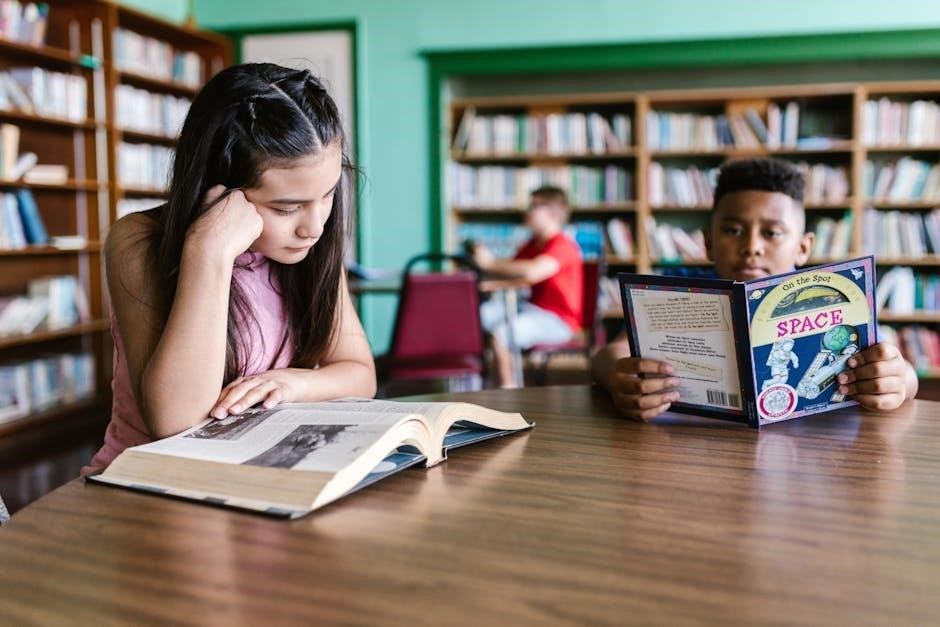
Complementing reading passages, worksheets reinforce essential language skills for 7th graders. These resources often integrate with PDF passages, focusing on grammar, vocabulary development, and writing proficiency. Worksheets provide targeted practice in areas like sentence structure, parts of speech, and punctuation, directly linked to the content encountered in reading materials.
Vocabulary exercises enhance understanding of new words within context, while writing prompts encourage students to synthesize information and express their ideas effectively. Utilizing these worksheets alongside reading passages creates a holistic learning experience, strengthening both comprehension and communication skills. They are invaluable tools for reinforcing concepts.
WH Questions Focused Reading Passages
Specifically designed for emerging readers, WH question passages aid comprehension. These passages center around questions beginning with “Who,” “What,” “Where,” “When,” “Why,” and “How,” guiding students to extract key information. They are excellent for building foundational reading skills and are often used for initial assessments of understanding.
These resources typically feature shorter texts, making them less daunting for students still developing their reading stamina. The focused question format encourages active reading and helps students learn to identify important details within the text. They are a great starting point for building confidence and comprehension skills.
Benefits of Using Short Reading Passages
Short reading passages offer numerous advantages for 7th graders. They prevent overwhelm, fostering engagement and boosting confidence, especially for struggling readers. These concise texts allow for focused practice on specific comprehension skills, like identifying the main idea or understanding vocabulary in context.
Furthermore, shorter passages facilitate quicker assessment of student understanding, allowing teachers to efficiently pinpoint areas needing improvement. They are ideal for classroom activities, homework assignments, and test preparation, providing targeted practice without excessive time commitment. This focused approach maximizes learning efficiency and promotes skill development.
Assessing Themes, Characters, and Events
Effective 7th grade reading passages should facilitate assessment of key literary elements. Questions focusing on themes – the central ideas explored in a text – encourage critical thinking. Analyzing characters, their motivations, and relationships, deepens comprehension and empathy.
Understanding the sequence of events and how they contribute to the plot is crucial. Passages like those based on “History of a Seagull…” provide excellent material for evaluating these skills. Diagnostic tests with 17 questions specifically target theme, character, and event comprehension. This targeted assessment helps educators gauge student understanding and tailor instruction accordingly.

Free Streaming and Television Options (Related to Educational Content)

Supplementing 7th grade reading passages with visual media can enhance learning. Platforms like Pluto TV offer free streaming of movies and television shows, including genres like documentaries, historical dramas, and comedies. These options can reinforce themes and vocabulary encountered in reading materials.
Students can explore diverse narratives and perspectives through film and television. Pluto TV provides live channels covering news, sports, and popular programs, offering a break while still exposing students to language and information. Carefully chosen content can complement reading assignments and foster a broader understanding of the world.

Utilizing Pluto TV for Supplemental Learning
Pluto TV serves as a valuable, free resource to complement 7th grade reading passages. Its on-demand library and live channels offer diverse content aligning with educational goals. Students can watch documentaries relating to historical texts, or comedies that illustrate character dynamics explored in fictional narratives.
The platform’s variety—reality shows, crime dramas, and romantic films—provides exposure to different writing styles and vocabulary. Teachers can assign specific programs to reinforce themes or spark classroom discussions. Pluto TV’s accessibility makes it an ideal supplemental tool, fostering engagement and enriching the learning experience beyond traditional reading.
Preparing for Standardized Tests with Reading Passages
Utilizing 7th grade reading passages in PDF format is crucial for standardized test preparation. Consistent practice with varied texts—fiction, non-fiction, biographies—builds essential comprehension skills. These passages mirror test formats, familiarizing students with question types assessing main ideas, vocabulary, inferences, and textual evidence.
Diagnostic tests, like those focused on “History of a Seagull…”, pinpoint areas needing improvement. Regularly analyzing passages enhances speed and accuracy. Worksheets covering grammar and writing further solidify foundational skills. Effective preparation involves timed practice and reviewing incorrect answers, ultimately boosting confidence and test performance.
Adapting Passages for Different Learning Needs
7th grade reading passages in PDF format offer flexibility for diverse learners. For struggling readers, shorter passages with simpler vocabulary are beneficial. Highlighting key information or providing pre-reading vocabulary lists can aid comprehension. For advanced students, challenging texts and open-ended questions encourage critical thinking.
Differentiation is key; passages can be modified to suit varying reading levels. Utilizing audio versions supports auditory learners. Breaking down complex passages into smaller chunks improves focus. WH Questions focused passages are ideal for beginners. Adapting materials ensures all students can access and succeed with the content.
Creating Your Own 7th Grade Reading Passages
Developing custom 7th grade reading passages in PDF format allows tailored instruction. Begin by selecting engaging topics relevant to students’ interests. Ensure the passages align with learning objectives and curriculum standards. Focus on clear, concise writing with appropriate vocabulary for the target reading level.
Incorporate diverse text structures – narratives, informational texts, biographies. Craft comprehension questions that assess key skills: main idea, inference, vocabulary. Utilize online tools to check readability and Lexile levels. Consider student input when choosing themes. Original passages can address specific needs and enhance engagement.
The Role of Parental Involvement in Reading Comprehension
Parental engagement significantly boosts 7th grade reading comprehension. Encourage regular reading at home, discussing passages and asking probing questions. Review completed worksheets and PDF-based assessments together, offering constructive feedback. Create a supportive reading environment free from distractions.
Help students connect reading to real-world experiences, fostering deeper understanding. Collaborate with teachers to identify areas needing improvement. Utilize online resources and reading materials together. Show enthusiasm for reading, modeling positive reading habits. Consistent parental support strengthens skills and builds confidence.
Improving Reading Skills with Targeted Practice
Consistent, targeted practice with 7th grade reading passages in PDF format is crucial for skill development. Utilizing resources like CommonLit, ReadWorks, and K12Reader provides diverse materials. Focus on key skills – identifying main ideas, vocabulary, and making inferences. Regular assessments pinpoint areas needing improvement.
Supplement practice with engaging content, including fictional narratives and non-fiction articles. Adapt passages to individual learning needs. Parental involvement and utilizing streaming options like Pluto TV can further enhance comprehension. Dedicated effort and strategic practice will yield significant gains in reading proficiency.
Leave a Reply
You must be logged in to post a comment.